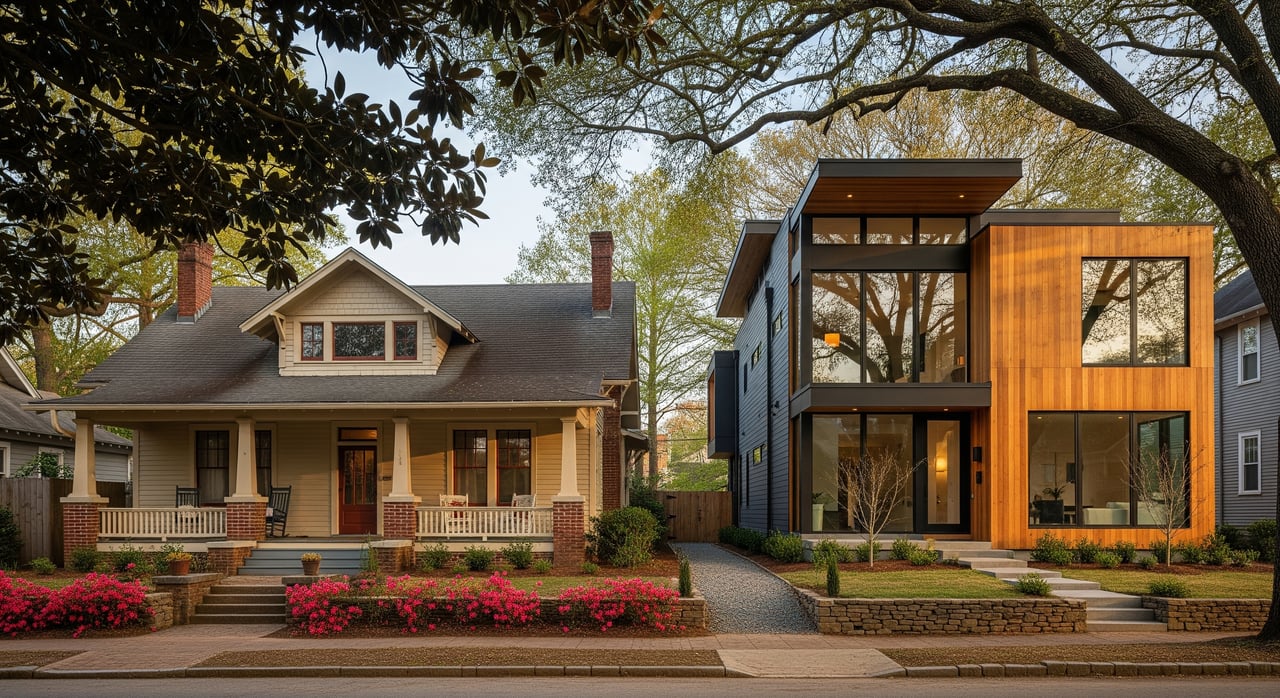
Love the look and feel of Little Five Points but not always sure what you’re seeing? This eclectic pocket on Atlanta’s east side layers artsy storefronts with early 20th‑century homes and mindful new builds, so every block tells a design story. If you care about architecture, walkability, and long-term value, learning to read those visual cues helps you buy or sell with confidence. In this guide, you’ll learn how to spot key styles, what to photograph, and how architecture affects maintenance and resale in Little Five Points. Let’s dive in.
How Little Five Points is shaped
Little Five Points is a compact, walkable commercial and residential node framed by older neighborhoods like Inman Park, Candler Park, and Virginia‑Highland. You’ll see a mix of historic storefronts, worker cottages, bungalows, and a handful of larger revival homes, alongside infill that respects lot size and street scale. The result is variety, not a single uniform historic district.
Some nearby streets fall under local historic district rules. The City of Atlanta’s historic preservation guidelines shape exterior changes in designated areas, so always check official maps and records to confirm status and any design review requirements before planning renovations.
Architectural styles you’ll see
Tudor Revival
You’ll recognize Tudor Revival by steep front gables, asymmetrical massing, and decorative half‑timbering over light stucco. Tall, narrow windows and arched doorways add to the storybook feel, and prominent brick chimneys often feature patterned details. Materials typically include stucco, brick, and timber trim.
- What to look for:
- Steep gables, grouped casement windows, and half‑timbering
- Arched entries and sculptural chimneys with chimney pots
- Small single‑family homes or townhouse rows with Tudor motifs
- Maintenance notes: Stucco and timber junctions are moisture sensitive. Complex rooflines mean more flashing and gutter intersections to maintain, and leaded glass windows may need specialized repair.
- Lifestyle fit: Perfect if you love character-rich millwork and cozy, defined rooms. Expect higher upkeep compared to simpler forms.
Colonial Revival
Colonial Revival leans traditional, with balanced facades and a centered entry framed by pilasters or a small portico. Multi‑pane double‑hung windows often have shutters, and exteriors are wood clapboard or brick with gable or hipped roofs.
- What to look for:
- Symmetry and a centered, emphasized front door
- Multi‑pane windows and simple classical trim
- Brick or clapboard exteriors on compact lots
- Maintenance notes: Wood siding requires periodic paint and caulk. Original single‑pane sash may need restoration, storm panels, or sensitive upgrades to boost energy performance.
- Lifestyle fit: Broad appeal for buyers who favor traditional layouts with formal living and dining spaces. Often simpler to maintain when systems are updated.
Italian Renaissance and Italianate Revival
These revivals nod to Italian palazzos, with low or hipped roofs and wide eaves supported by decorative brackets. Tall, narrow windows often have arched tops, and you’ll see masonry facades with detailed cornices and stone or terra cotta accents, especially on commercial blocks.
- What to look for:
- Bracketed cornices, arched windows, and formal entries
- Brick or stone fronts with ornamental lintels
- Along the L5P strip, arched storefronts and strong rooflines
- Maintenance notes: Masonry needs periodic repointing and careful water management. Cornices and brackets, sometimes metal or wood, require inspection and specialized repair.
- Lifestyle fit: Solid, formal presence with lower day‑to‑day exterior maintenance, though masonry restoration can be a larger investment.
Thoughtful newer builds and infill
New construction in and near L5P often reinterprets neighborhood scale with modern systems and simplified details. You’ll notice clean lines, larger windows, and materials like fiber‑cement siding, modern masonry veneers, engineered wood, and metal accents.
- What to look for:
- Calm rooflines, clear proportions, and windows scaled to the street
- Open interior plans with improved insulation and HVAC
- Contemporary trim details that still fit the block
- Maintenance notes: Newer systems can mean lower short‑term upkeep. Pay attention to grading, drainage, and envelope detailing, which vary by builder.
- Lifestyle fit: Ideal if you want the in‑town lifestyle with modern comfort and energy performance.
Style, maintenance, and resale
Older homes often share a few big maintenance drivers: roofs and flashing, wood trim and windows, masonry and chimney care, and updates to HVAC, electrical, and plumbing. Complex rooflines cost more to maintain. Wood exteriors need paint and regular inspection. Masonry buildings require repointing and careful moisture control.
Style adds nuance. Tudors tend to have more roof valleys and moisture‑sensitive stucco and timber, so you’ll budget for a meticulous exterior maintenance plan. Colonial Revival homes usually need ongoing paint and window care unless upgraded thoughtfully. Italian Renaissance or Italianate buildings feel sturdy, yet cornices and masonry repairs call for specialized trades. Newer infill often brings lower immediate maintenance and better energy performance, but quality varies by build.
In L5P, walkability, cultural energy, and authentic design drive demand. Homes that deliver intact period details along with modernized systems often earn a premium. Highly original but unrestored properties can thrill design‑minded buyers yet narrow the pool. Balanced renovations that respect character while improving function tend to attract the widest audience.
Historic designation can shape both value and choice. Design review can limit exterior changes but has been associated in several studies with stabilized or increased values, depending on enforcement and market conditions. Always confirm whether a property falls within a local district before setting expectations for timeline and scope.
What to photograph and how to caption
Great photos help buyers read a home’s story quickly and help sellers present value clearly. Use these checklists when scouting or prepping a listing.
Exterior checklist
- Whole‑façade shot at eye level to show massing and roofline
- Closeups of defining details: half‑timbering, cornices, brackets, entry surrounds
- Window details: sash, muntins, casements, and any leaded glass
- Brick or stone patterns, mortar condition, and chimney details
- Streetscape context: sidewalk, tree canopy, neighboring scale, and nearby storefronts
Caption tips: Note the style and approximate era, name key materials, flag typical maintenance considerations, and add a lifestyle note. For example: “Tudor Revival, c. 1920s to 1930s, stucco with half‑timbering. Watch for stucco hairline cracks and flashing at intersecting gables. Walkable block near shops.”
Interior checklist
- Fireplaces, staircases, built‑ins, original moldings, and door hardware
- Kitchens and baths with notes on upgrades and system improvements
- Floor plan cues that show compartmentalized rooms or open flow
Caption tips: Identify original details versus thoughtful updates. Note energy or comfort improvements like insulation or HVAC replacement that matter to everyday living.
Comparative shots
- Side‑by‑side of a restored period detail next to a renovated modern kitchen
- Then and now pairings that show careful exterior rehabilitation
Caption tips: Explain the tradeoff between authenticity and comfort. Point out reversible or historically sensitive upgrades that preserve value.
Quick checklists for buyers and sellers
If you’re a design‑minded buyer
- Inspect roofing and flashings, chimney condition, and guttering
- Evaluate window frames and sashes for rot or restoration quality
- Review foundation, grading, and visible electrical and plumbing
- Budget for at least some systems updates with older stock
If you’re a seller aiming to maximize appeal
- Prioritize visible, high‑impact fixes: exterior paint and trim, roof and gutter stability
- Update key mechanicals like HVAC and hot water where needed
- Refresh kitchens and baths in scale with the house, respecting period details
- Document ages of major systems, any design approvals, and notable original features
For everyone: confirm regulations
- Verify if the property is within a local historic district
- Understand design review requirements and timing for exterior changes
- Plan projects with neighborhood scale and materials in mind
Renovating in a historic context
In and around Little Five Points, context is everything. Even when a home is not in a designated district, thoughtful exterior choices help maintain the block’s character and protect your investment. Keep additions and rooflines proportional, match trim profiles carefully, and select materials that echo the street’s rhythm.
For designated areas, learn the City’s design review process early, align your architect and contractor with those standards, and build a timeline that accounts for approvals. Many owners combine sensitive restoration of visible elements with targeted energy upgrades like insulation, HVAC replacement, and weather‑stripping to improve comfort without sacrificing character.
Bringing it all together
You do not have to choose between design and practicality in Little Five Points. When you can read the street’s styles, photograph the right details, and plan updates that respect scale, you set yourself up for a smart purchase or a standout listing. Lean into authentic materials and craftsmanship, but pair them with modern systems that support everyday living. That balance is where value lives in L5P.
If you want design‑informed guidance as you buy or sell in Atlanta’s in‑town neighborhoods, I’m here to help. Reach out to Gena Knox for a warm, detail‑driven approach that presents homes as lifestyle stories and leads to confident decisions.
FAQs
What makes Little Five Points architecture distinct in Atlanta?
- You’ll see a tight, walkable commercial strip set against early 20th‑century homes and mindful infill, creating more variety than a single uniform historic district.
How do you identify a Tudor Revival home in Little Five Points?
- Look for steep gables, half‑timbering over light stucco, arched doorways, tall narrow windows, and prominent chimneys with patterned brick or chimney pots.
Do historic district rules always apply in Little Five Points?
- Not always. Some surrounding streets are designated while others are not, so confirm status with City of Atlanta records before planning exterior changes.
Which styles typically have the lowest near‑term maintenance?
- Thoughtful newer infill often offers lower short‑term maintenance due to modern systems, though build quality and site drainage should still be verified.
What photos should a seller prioritize for a Little Five Points listing?
- Capture a clear façade, closeups of defining details, window and masonry condition, the roofline and chimney, plus a streetscape shot that shows walkability and scale.